
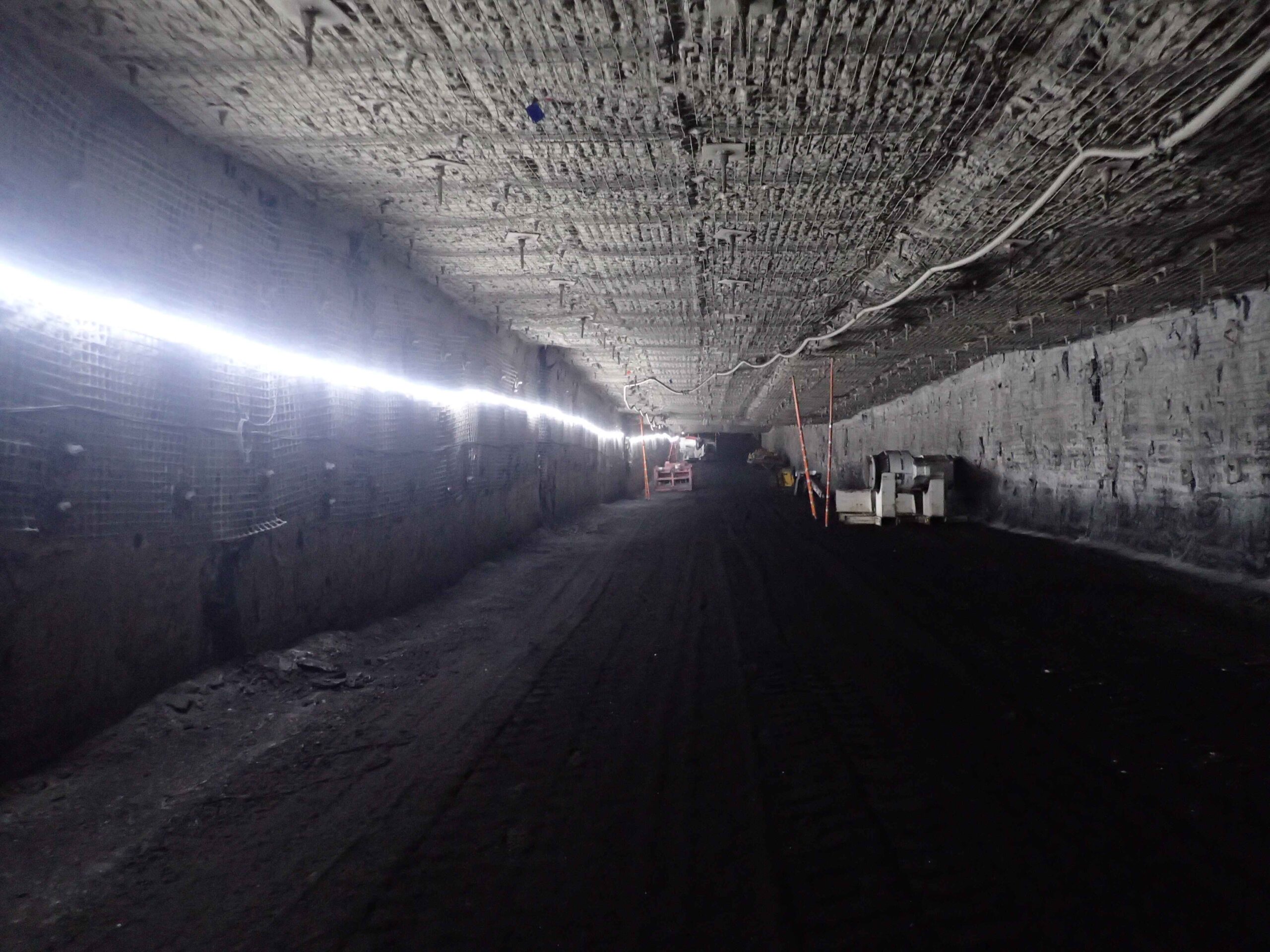
Water utility workers carry torches because permanent lighting has failed, degraded, or never provides adequate lighting. Ageing fluorescent fittings corrode in high humidity. Deferred maintenance leaves dark sections unreplaced for years. Where permanent lighting does operate, shadow zones around structural features and lighting levels below the minimum for safe inspection work still mean the torch stays on the belt.
About MineGlow: MineGlow is an Australian industrial LED strip lighting company founded in 2014. MineGlow supplies water utilities, mining, tunnelling, and hazardous area infrastructure across Australia and the UK. The company has installed over 20 kilometres of LED strip lighting in water utility tunnels, reservoir passages, and dam walls with over 280km installed in mines across Australia.
Ask a maintenance team preparing to enter a water tunnel in Australia what they are taking in with them, and a torch will be on the list. Not as a backup. As a working tool. In tunnels that have had permanent lighting installed for years, workers still reach for a handheld light the moment they step through the access shaft. This is not a gap in planning. It reflects a practical reality that most water utility lighting installations have not yet addressed.
Permanent tunnel lighting systems are designed for general visibility during normal operations. They produce enough illumination to allow safe movement through the tunnel, to read pipe markings at reasonable distances, and to identify the structure along its length. What they are not designed for, and often cannot achieve in practice, is the kind of directed, close-range illumination that inspection and maintenance work demands.
Add to this the widespread reality that a significant number of water tunnels across Australia and the UK have lighting systems that are years past their service life, and the situation becomes clear. Workers are using torches because the permanent lighting does not do what it should do, and in many sections it is not functioning at all.
Why Permanent Lighting Fails in Water Tunnels
Water tunnels are hostile to conventional lighting systems. The combination of constant humidity, condensation on all surfaces, water ingress during flooding events, vibration from pump operation, and corrosive compounds in the atmosphere creates conditions that accelerate the deterioration of standard luminaires far faster than their rated service life would suggest.
Corrosion and humidity
Fluorescent and HPS fittings installed in underground water infrastructure without adequate ingress protection corrode from the outside in. The lamp holder corrodes first. Then the terminal connections. Then the housing itself. In a tunnel running 24 hours a day in high humidity, even fittings rated for outdoor use can show failure within two to three years. The result is a progressive loss of light output across the tunnel length as individual lamps fail and are not replaced.
Corrosion also affects the electrical connections feeding the lighting circuit. High humidity causes oxidation at terminal points, increasing resistance, producing heat, and eventually causing open circuits that take out entire sections of a lighting run at once rather than individual fittings. When this happens in the middle of a long tunnel, the affected section becomes completely dark until a maintenance visit can be arranged.
Ageing infrastructure and deferred maintenance
A significant proportion of water tunnel lighting across Australia was installed in the 1980s and 1990s. Much of it has never been systematically replaced. Budget pressures on water utilities mean that non-critical infrastructure upgrades are consistently deferred in favour of higher-priority pipe maintenance, pumping equipment, and treatment process investment.
The Bureau of Meteorology’s National Performance Report records that Australian water utilities manage over 200,000 kilometres of water mains, much of it reaching or past its design life. Lighting is not the primary asset being managed in this infrastructure, which means it often goes unrenewed for decades. Workers entering tunnels with 30-year-old fluorescent fittings that have not been on a replacement program are routinely finding that a significant number of those fittings no longer operate.
Older systems and voltage drop over distance
Many older tunnel lighting systems were designed around a smaller number of high-wattage fluorescent or HPS luminaires spaced at intervals along the tunnel wall or ceiling. As the installation ages, the lamp closest to the power supply at each end tends to remain functional longest. The lamps furthest from the supply, where voltage drop is greatest, fail earliest. In a long tunnel this creates a predictable pattern: relatively good illumination near each access point and progressive darkness toward the midpoint. Workers operating in the middle section of a long tunnel are often working in the darkest part of the installation.
Key fact: Conventional fluorescent lamps typically achieve 8,000 to 15,000 operating hours before failure under continuous service conditions. In a water tunnel running 24 hours a day, this equates to lamp replacement every one to two years per fitting. A tunnel with 50 fittings requires 25 to 50 lamp changes per year under normal operation. Most water utility lighting programs do not have the maintenance frequency to keep pace with this.
Why Even Functioning Permanent Lighting Is Not Enough for Maintenance Work
The problem is not only broken fittings. Even in tunnels where the permanent lighting system is fully operational, workers still need torches for specific tasks. This is a fundamental limitation of how permanent tunnel lighting systems are designed rather than a failure of any particular installation.
Permanent lighting illuminates the tunnel. It does not illuminate the work area.
Permanent lighting systems are positioned on walls or ceilings to distribute illumination evenly across the tunnel space. The objective is to ensure that workers can see the floor, the pipe runs, and the general structure as they move through the tunnel. This works well for navigation and general inspection from a distance.
It does not work well for close inspection tasks. When a worker needs to examine a joint in detail, read a pressure gauge, inspect a valve seal, or check a pipe surface for cracking or corrosion, they need directed light at close range. Overhead or wall-mounted luminaires produce light at an angle that creates deep shadows precisely where the detail work is happening. The overhead illumination that lights the tunnel perfectly well for walking through it produces exactly the wrong light for a worker crouched at pipe level examining a fitting.
Handheld torches and headlamps are essential for task-specific illumination in these situations. Permanent lighting is designed for general visibility and is not a substitute for directed task lighting at the work surface.
Shadow zones around structural features
Tunnels are not open corridors. They contain pipe runs, cable trays, support brackets, valves, access hatches, and junction chambers. Every one of these structural features creates shadow zones when lit from above or from the side. Workers operating around complex pipework arrangements, behind cable trays, or inside junction chambers find that the permanent lighting barely penetrates their actual work area at all. Handheld torches improve visibility for detailed inspection tasks precisely because they can be directed into the shadow zones that fixed luminaires cannot reach.
Lighting levels and the minimum standard for safe work
Australian Standard AS/NZS 1680.2.1 specifies minimum illuminance levels for industrial interiors and work areas. For inspection and maintenance tasks in confined underground spaces, the minimum level for safe operation is significantly higher than the general visibility level that permanent tunnel lighting typically delivers. Emergency lighting under AS2293 must provide at least 10 lux measured 900 millimetres above floor level for evacuation route marking, but this is a minimum evacuation standard, not a task lighting standard.
A worker performing inspection of pipe joints, reading instrumentation, or identifying corrosion or defects in tunnel lining surfaces needs illuminance levels well above the general tunnel ambient. When the permanent lighting delivers 50 to 100 lux at floor level across a 2-metre-wide tunnel, the illuminance on a vertical pipe surface half a metre off the floor at the back wall may be 10 to 20 lux. That is below the level needed for effective inspection work. The torch fills this gap because the permanent lighting system physically cannot.
Flammable gas environments and intrinsically safe requirements
In water tunnels that pass through or adjoin sewage infrastructure, flammable gases including methane and hydrogen sulphide may be present. In these classified hazardous zones, regulatory standards require that all electrical equipment including lighting must be certified for use in explosive atmospheres. Workers using standard battery torches in classified Zone 1 or Zone 2 areas are operating with non-compliant equipment. The torch must carry IECEx intrinsic safety certification for the gas group present, not just a waterproof rating.
Water utility workers in tunnels may also use torches to signal hazards when noise levels are high and verbal communication is not reliable. In these situations the torch serves as both a task light and a safety signalling tool. This is a real operational behaviour in tunnels where pumping noise levels make voice communication unreliable even at short distances.
What Adequate Permanent Lighting in a Water Tunnel Actually Requires
Solving the torch problem in water tunnels requires permanent lighting that does two things the current generation of installed systems generally cannot do. It must provide illumination levels adequate for maintenance and inspection work throughout the full tunnel length, and it must do so reliably for years between maintenance visits.
Continuous illumination without shadow gaps
Point-source fittings mounted at intervals on a tunnel ceiling or wall produce a pattern of bright zones beneath each fitting and progressively darker zones between them. The deeper the tunnel, the greater the distance between fittings, and the more pronounced the shadow pattern. This is why workers routinely find themselves in dark sections even in tunnels that technically have working permanent lighting.
LED strip lighting solves this by delivering continuous illumination along the full tunnel length rather than discrete bright points. The brightness is consistent from one end of the run to the other, with no dark gaps between fittings. There is no practical distance along the tunnel wall where the illuminance drops to the point where a torch is needed for general visibility. For a detailed comparison of how LED strip lighting addresses the limitations of fixed point fittings in water infrastructure, see why water utilities are switching from fixed fittings to LED strip lighting.
Adequate light output for inspection work
General ambient illumination and task illumination are different things. A permanent lighting system that provides adequate general visibility for navigation through a tunnel does not automatically provide adequate illumination for close inspection work on pipe joints, valve assemblies, or structural surfaces. Lighting specifications for water utility tunnels should address both the general ambient level and the illuminance at typical inspection surfaces, including vertical pipe surfaces, low-level fittings, and recessed access chambers.
LED strip systems allow light output to be specified for the actual working conditions. A strip running at wall height rather than ceiling height delivers far more effective illuminance on the pipe runs and structural surfaces that maintenance teams are inspecting, compared to an overhead fitting that throws light primarily onto the tunnel floor.
Reliability that eliminates the reactive maintenance cycle
Industrial-grade LED strip lighting operates for over 50,000 hours under continuous service conditions, consuming 70 to 90% less electricity than conventional fluorescent fittings, which improves energy efficiency and reduces operational costs significantly over the tunnel asset life. In a tunnel running 24 hours a day, this represents more than ten years of operation before any significant reduction in light output would be expected. The parallel wiring design means that if a section of strip is damaged, a maximum of around 10 centimetres is affected while the rest of the run continues to operate normally.
This eliminates the progressive failure pattern of conventional lamp-based systems where fittings at the far end of a voltage supply run fail earliest and create the predictable dark zones that maintenance workers navigate around on every visit. A well-specified LED strip installation should not require torch use for general navigation in the tunnel for the full service life of the installation.
IP67 protection for the actual environment
Every fitting installed in an underground water tunnel should carry a minimum IP67 ingress protection rating as standard. This covers complete dust protection and temporary water immersion up to 1 metre for 30 minutes, addressing the flooding and condensation conditions that destroy conventional fittings. For a full breakdown of which IP rating applies to which water utility environment, see MineGlow’s guide on IP67 vs IP68 vs IP65 for water infrastructure lighting.
Emergency Lighting: What the Standards Actually Require in Water Tunnels
Emergency backup lighting is a separate requirement from general permanent lighting, and it is one that many water tunnel installations do not meet correctly. Under Australian Standard AS2293, emergency lighting must provide at least 10 lux measured at 900 millimetres above floor level on evacuation routes. Emergency lighting systems must remain operational for a minimum of 90 minutes after loss of normal power supply. All emergency light fittings must be tested every six months to confirm the battery backup performs to the required standard.
In water utility tunnels classified as confined spaces under AS2865, emergency lighting is not a building code requirement in the same sense as a commercial building. It is a site-specific risk control measure. The confined space entry procedure must identify whether adequate emergency lighting is available if the primary lighting fails during an entry. If a power failure occurs while workers are in a water tunnel, they must have sufficient illumination to exit safely. In long tunnels without working emergency backup lighting, workers rely on their torches as the only available emergency illumination.
Emergency lighting must last at least 90 minutes after power loss in Australian installations. Exit signs must be internally lit and have battery backup. Fittings must be impact resistant and capable of operating in the temperature and humidity conditions of the specific location. In a water tunnel environment, this means the emergency lighting fittings face the same humidity, corrosion, and ingress challenges as the primary lighting. Standard commercial emergency fittings are not suitable.
Emergency lighting checklist for water tunnels: Minimum 10 lux at 900mm above floor level on the evacuation route. Battery backup capable of 90-minute continuous operation. Six-monthly discharge test and inspection. Impact-resistant fittings rated for tunnel humidity conditions. In classified hazardous zones, fittings must also carry IECEx certification for the gas group present. Standard commercial emergency fittings do not meet these combined requirements.
Temporary Lighting During Maintenance Work: The Practical Reality
Even in a tunnel with a properly functioning, well-specified permanent lighting system, temporary lighting is a legitimate and often necessary tool for certain types of maintenance work. The question is not whether workers should carry portable lights, but whether the portable lighting they are using is adequate for the task and compliant with the environment.
Temporary lights can be mounted to walls or soffits during a maintenance operation to supplement the permanent lighting in a specific work area. Temporary lighting is often reused from previous installations on other projects, particularly from construction projects where the equipment was originally procured for tunnel build-out phases. This is practical from a cost perspective but introduces a risk if the temporary equipment being reused is not rated for the specific environment where it is being deployed.
For temporary lighting in water utility tunnels, the same IP67 minimum requirement applies as for permanent installations. For classified hazardous zones in sewage infrastructure, temporary lighting must also carry IECEx certification. A temporary LED strip hung on magnetic hooks in a non-classified fresh water tunnel is a legitimate and effective solution. The same product used in a classified Zone 1 sewage section without IECEx certification is a compliance breach.
The most effective approach to temporary task lighting in water tunnels is a portable LED strip system that can be deployed quickly, provides shadow-free uniform illumination across the full work area rather than a single directed beam, and is rated for the tunnel environment. Magnetic-mount LED strip systems allow a maintenance crew to set up proper work area illumination in minutes without any fixed installation, and to remove it when the job is complete.
Torch vs Permanent LED Strip Lighting: What Each Is Actually For
The table below clarifies the appropriate use of each lighting type in water utility tunnel environments.
Lighting Type | What It Does Well | What It Cannot Replace |
Handheld torch or headlamp | Close inspection of pipe joints, valves, and surfaces. Navigation when permanent lighting has failed. Hazard signalling in high-noise environments. Task lighting in shadow zones around structural features. | General tunnel illumination for an entire access. Safe ambient lighting across a long tunnel length. Emergency evacuation route lighting. Compliant permanent lighting in classified zones. |
Conventional fixed fittings (fluorescent or HPS) | General ambient lighting when installed and functioning. Adequate illumination for navigation in a well-maintained installation. | Task lighting at inspection surfaces. Reliable long-term operation in high humidity without frequent lamp changes. Illumination between fittings. Resistance to corrosion without specialist IP-rated housings. |
Industrial LED strip lighting (IP67, permanent) | Continuous illumination across the full tunnel length with no shadow gaps. 50,000-plus hour service life. Reliable operation in high humidity and condensation. Parallel wiring means partial failure does not take out the run. | Not a substitute for close-range inspection torches in shadow zones. Does not replace IECEx certified emergency backup lighting in classified hazardous zones. |
Temporary LED strip (magnetic mount) | Shadow-free task lighting across a specific work area. Rapid deployment without wiring. Reusable across multiple maintenance events. Supplements permanent lighting during specific operations. | Not a substitute for permanent installation in regularly accessed tunnels. Must be IP67 rated minimum and IECEx certified if deployed in classified zones. |
Emergency backup lighting (AS2293 compliant) | 90-minute evacuation illumination after power loss. Minimum 10 lux at 900mm above floor level on evacuation route. Battery-independent operation. | Not designed for task lighting or general maintenance illumination. Minimum standard only. Must be tested every six months. |
The Point at Which Torches Become a Problem
There is nothing wrong with a water utility worker carrying a torch into a tunnel. For close inspection work, for navigating shadow zones, for task lighting around complex pipework, a handheld light is a legitimate and often necessary tool. The problem is when the torch is being used to compensate for a permanent lighting system that is not doing its job.
When workers are using torches to navigate through sections of tunnel that should be adequately lit, that is a permanent lighting failure. When they are relying on handheld battery lights as their only illumination in an emergency, that is an emergency lighting compliance gap. When they are using non-certified torches in classified hazardous zones, that is a safety and regulatory exposure.
The solution is not to stop workers from carrying torches. It is to ensure that the permanent lighting system in the tunnel is specified and maintained to the standard that makes torches a supplementary tool rather than a primary one. For water utilities evaluating their current tunnel lighting against this standard, MineGlow’s LED lighting for water utilities page covers the product range and how each element applies to the specific environments found in Australian and UK water infrastructure.
Frequently Asked Questions
These questions reflect the most common queries from water utility maintenance managers, safety officers, and asset engineers dealing with tunnel lighting.
Q: Why do water utility workers need torches if permanent lighting is already installed?
Permanent tunnel lighting provides general ambient illumination for navigation and general visibility. It does not provide adequate task lighting for close inspection work on pipe joints, valve assemblies, and structural surfaces, where shadow zones around structural features and low illuminance levels at vertical working surfaces make handheld lighting necessary. Workers also use torches as backup when ageing permanent systems have failed in sections of the tunnel.
Q: What is the minimum lighting standard for water utility tunnel maintenance in Australia?
Australian Standard AS/NZS 1680.2.1 specifies minimum illuminance levels for industrial interiors and inspection tasks. For work in confined spaces classified under AS2865, the lighting must be adequate for the specific tasks being performed. Emergency lighting under AS2293 requires a minimum of 10 lux at 900 millimetres above floor level on evacuation routes, with 90-minute battery backup. These are minimum emergency standards, not task lighting standards. Maintenance and inspection work requires significantly higher illuminance levels.
Q: How often does emergency lighting in water tunnels need to be tested?
Under Australian Standard AS2293.2, all emergency and exit lights must undergo a 90-minute discharge test every six months to confirm the battery backup performs to the required standard. In water tunnel environments, the humidity and corrosion conditions accelerate battery and fitting deterioration, which makes this six-monthly testing requirement particularly important. Fittings that fail the discharge test must be replaced before the next confined space entry that depends on that emergency lighting.
Q: Can standard IP67 LED strips be used as emergency backup lighting in water tunnels?
Standard IP67 LED strips are suitable as permanent lighting in non-classified water tunnels but are not designed as AS2293-compliant emergency backup systems. Emergency lighting systems require specific battery backup capacity, 90-minute runtime certification, and in classified hazardous zones, IECEx certification for the gas group present. The emergency lighting system must be independently certified to AS2293 requirements and tested separately from the permanent lighting installation.
Q: What makes LED strip lighting better than conventional fittings for water tunnel permanent lighting?
LED strip lighting provides continuous illumination along the full tunnel length without the shadow gaps between fittings that characterise conventional point-source installations. Industrial-grade LED strips operate for over 50,000 hours under continuous service, eliminating the frequent lamp replacements that conventional fluorescent or HPS fittings require in a 24-hour operation. Parallel wiring means partial failures do not take out the full run. IP67 rating as standard means the corrosion and humidity conditions that destroy conventional fittings over two to three years do not affect the LED strip installation over its ten-year-plus service life.
Q: Do workers need IECEx certified torches in water tunnels?
In sections of water tunnel classified as Zone 1 or Zone 2 hazardous areas, including sewage tunnels and pump station wet wells where methane and hydrogen sulphide may be present, all electrical equipment including portable lighting must carry appropriate IECEx or ATEX certification for the gas group of the location. A standard consumer torch used in a classified hazardous zone is non-compliant regardless of its IP rating. The certification requirement applies to the ignition risk, which is separate from the water ingress protection the IP rating addresses.