
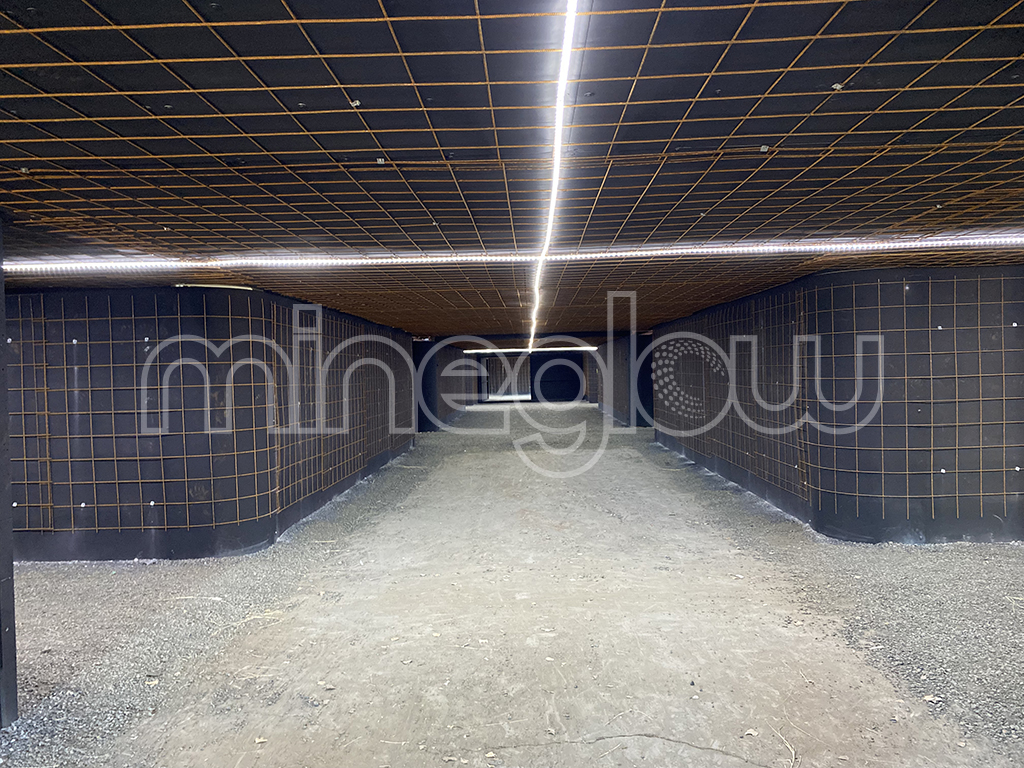
Water utility operational areas that utility teams work in are very demanding for any LED lights or lighting systems. Damp tunnels, confined reservoir chambers, dam galleries, pump stations, and sewage infrastructure combine moisture, humidity, vibration, and confined spaces that expose the limitations of conventional fixed fittings very quickly.
Across Australia and the UK, maintenance managers and asset engineers are making a clear shift toward LED strip lighting as the next logical replacement for traditional lighting options. The reasons are not abstract. This comes down to highly reliable lighting resulting in reduced maintenance costs, better safety, genuine energy savings, and a lighting setup that suits the physical reality of water infrastructure rather than fighting it.
Here are the five reasons that come up most consistently when water utility teams make the switch.
Reason 1: Fewer Replacements and Lower Maintenance Costs
The most immediate frustration with fixed fittings in water infrastructure is how often they need attention. Festoon-style conventional lighting options, including LED spot lights, fluorescent lighting, halogen lights, and incandescent bulbs, have relatively short operational lives of between 8,000 and 15,000 hours. The other major factor is that the housing for each lighting fixture is prone to corrosion, moisture build-up inside the housing, and/or water ingress.
In water infrastructure, the next challenge is that each replacement is not a quick job. Access to underground confined spaces requires confined space entry procedures. For instance, in the UK, water tunnels, replacing a failed fitting, often means a dive team on standby at around £2,000 per day. In Australian assets, the coordination requirements are similar. Deferring repairs until multiple fittings fail makes financial sense operationally, which means poor lighting conditions accumulate between maintenance windows, making it harder to carry out the work; never mind the reduced safety aspect.
High-quality LED strips, including the industrial-grade strips designed specifically for harsh environments, operate for over 50,000 hours under continuous service, which works out to more than 5 years of around-the-clock operation. That is several times the lifespan of the current conventional alternatives and translates directly into far fewer replacements over the asset’s service life. Mineglow’s LED strip lighting range carries a five-year warranty and is designed to perform maintenance-free in the harshest underground conditions for up to 10 years.
The parallel wiring design adds another layer of protection. If one section of a strip is damaged, the rest of the light strip continues to operate. Only the affected 10 centimetres fail, rather than the entire fitting going dark, which means minor issues can wait for a planned visit rather than triggering an emergency callout. The reduction in reactive maintenance is one of the biggest financial wins water utilities report after making the switch. LED technology is also more environmentally friendly than conventional options, containing no hazardous materials like mercury found in fluorescent tubes.
Reason 2: Exceptional Energy Efficiency and Lower Running Costs
Water infrastructure lighting runs continuously. Tunnels, reservoir access passages, and pump stations do not get switched off overnight. Over a year of 24-hour operation, the energy costs from conventional lighting add up to a significant and ongoing expense.
LED technology converts around 95% of the energy it consumes into light, with only 5% lost as heat. Traditional lighting systems, by contrast, waste close to 90% of their energy as heat rather than light. In practical terms, highly energy-efficient LED strip systems consume 70 to 80% less electricity than incandescent bulbs and 40 to 60% less than comparable fluorescent lighting, reducing both running costs and carbon footprint. A University of Michigan study found LED products to be 18 to 44% more efficient than T8 fluorescent tubes in direct comparisons.
For water utilities managing large underground networks, those energy savings across multiple sites add up to substantial savings on electricity bills each year. The initial cost of switching is typically recovered within two to four years through reduced energy bills, lower energy costs, and fewer maintenance callouts, after which the savings are ongoing.
LED strip lights also produce very little heat compared to fluorescent or halogen alternatives. In enclosed underground spaces, low heat emission matters both for energy bills and for the comfort and safety of workers. Overheating fittings in tight spaces can create fire hazards with traditional lights. LED strips rated IP67 run cool regardless of ambient temperature. Mineglow’s strips are tested to operate reliably from -30 to +80 degrees Celsius, covering the full range of conditions found in water infrastructure across Australia and the UK. For an overview of how Mineglow’s products are specified for these environments, see the benefits of x-Glo LED strip lighting.
Reason 3: Uniform Illumination That Enhances Safety
Fixed point fittings (festoon style lighting) produce pools of light separated by darker areas. In any tunnel or confined corridor, this creates a pattern that maintenance workers and inspection teams navigate every visit. Shadow zones between fittings obscure pipe markings, valve labels, floor conditions, and hazards. Workers adjust, but the reduced visibility is a real risk factor in environments where a missed step or unseen hazard can cause a serious incident.
LED strips deliver continuous, uniform illumination along the full length of a tunnel or gallery wall, reaching full brightness immediately without any warm-up time. Whether providing ambient lighting across an access passage or direct task lighting over a work area, there are no gaps, no pools of lighting, and no areas of reduced brightness between fittings. Workers get a more consistent light across a greater area from a single continuous run of LED strip lighting rather than multiple spaced point fittings. The effect is described by maintenance teams as close to daylight conditions (6500k) inside an underground space, which improves both worker confidence and accuracy of inspection work, and most of all, much improved safety.
The improved safety outcomes and better colour accuracy are practical benefits that are easy to underestimate. High-quality LED strips produce consistent colour temperature output, available in warm white tones for control rooms and cool white for inspection work, making it significantly easier to read colour-coded pipes, warning labels, and instrumentation. The improved visibility reduces fatigue during long inspection shifts and improves safety by ensuring workers can see what they are working with clearly.
Modern LED strip systems can also be configured for dynamic lighting functions, including dimmer switches for adjustable brightness levels. The RGB LED strip lights using a controller such as the em-Control emergency lighting solution can provide smart lighting to colour code emergencies, exit routes, and provide visual alerts.
For sewage infrastructure where flammable gases require explosion-proof lighting, Mineglow’s SafeGlo explosion-proof LED strip range provides the same uniform, shadow-free illumination in IECEx and ATEX certified form. The safety case for LED strips applies across the full spectrum of water utility environments, including classified hazardous zones.
Reason 4: A Flexible Strip Format That Fits Where Fixed Fittings Cannot
Fixed fittings come in standard sizes. Water infrastructure does not. Tunnels curve. Access passages have irregular cross-sections. Reservoir chambers have awkward corners. Dam wall galleries run through bends and junctions. Installing a rigid point-source fixture in a tight space often means compromising on coverage, complex custom mounting, or simply leaving sections without adequate lighting.
LED light strips are flexible by design and are used across indoor and outdoor applications, from outdoor spaces like dam walls and external pump stations, to enclosed underground tunnels and confined spaces. A flexible strip bends to follow curves, corners, and irregular surfaces without any special hardware. Proper installation of LED strip lights in water infrastructure is straightforward. Strips attach to existing surfaces, including tunnel walls, ceilings, and catenary wires, using mounting clips, adhesive backing, or magnetic hooks for temporary use in areas with steel infrastructures, such as large pipes. There is no need for bulky housing, custom brackets, or significant additional cabling infrastructure.
Strips can be cut to a desired length at designated cut points, typically every 10 centimetres, so the exact length needed for any run can be ordered or cut on site. When you need to link multiple strips across a longer section of tunnel, connectors join them end to end before running back to a single power source. The ability to run continuous illumination over long distances from fewer power supplies is particularly valuable in water tunnels where access points are spaced far apart.
Mineglow’s 48V Tunnel Range supports continuous runs of up to 400 metres between power supplies, which addresses one of the most common challenges in long-distance water tunnel lighting. For shorter standard runs, the Mineglow Standard Range option supports up to 100 metres per supply. This level of flexibility simply does not exist with fixed-point fittings.
Beyond functional lighting, the slim profile of LED strips also allows them to be used for architectural features and lighting effects in control rooms and above-ground utility buildings. The product range spans various lengths and configurations for different applications. Temporary installation is another genuine advantage. Maintenance crews carrying out planned inspection work can hang LED strips on magnetic hooks along a work section in minutes, providing proper task lighting across the full workspace without any wiring or permanent fixing. When the job is done, the light strip is rolled up and removed. This removes having to use cap lamps or bulky portable lighting that is difficult to carry and set up. Often needing several units to be brought in. In the case of an LED Strip light system, one only needs to bring in a reel of lights and a single power supply.
Reason 5: Built to Handle the Conditions That Damage Fixed Fittings
The environments inside water infrastructure are not kind to conventional lighting. Constant humidity causes corrosion. Condensation works its way into housings that are not properly sealed. Vibration from pumps and equipment loosens connections and cracks lamp holders over time. Water exposure from regular flooding, cleaning, or accidental contact finishes off fittings that conventional lighting was never really designed to tolerate.
Industrial LED strip lighting is engineered specifically for these conditions. The strips carry IP67 ingress protection as standard, meaning complete dust protection and resistance to temporary water immersion up to 1 metre for 30 minutes. This covers the flooding, condensation, and high-humidity exposure that water tunnels and reservoir chambers regularly experience. For submerged applications, IP68-rated options provide continuous submersion protection.
The silicone or PVC extrusion encasing the LED strip seals it against moisture, dust, chemical exposure, and vibration (IK10 rated). Advanced industrial strips use nanotechnology built into the extrusion to repel dirt and resist the kind of chemical environment found in sewage and wastewater systems, where hydrogen sulphide and other aggressive compounds are present. The result is a lighting setup that requires little to no cleaning to maintain its light output over years of service.
High-end industrial LED strip light systems also feature dual power feeds as standard, meaning that if one power supply fails, lighting remains operational. For water infrastructure where a power supply failure in a live tunnel is an operational and safety issue, this redundancy matters. See Mineglow’s guide to hazardous LED lighting solutions for further details on how these systems are specified for demanding water and industrial environments.
Fixed Fittings vs LED Strip Lighting: At a Glance
This table summarises the key differences between conventional fixed fittings and industrial LED strip lighting for water utility applications:
| Criteria | Conventional Fixed Fittings | Industrial LED Strip Lighting |
| Service life | 8,000 to 15,000 hours (fluorescent); less for halogen | 50,000+ hours continuous |
| Energy consumption | High: fluorescent uses 40-60% more energy than LED | 70-80% less electricity than incandescent; 40-60% less than fluorescent |
| Failure model | Single unit failure takes out the full fitting area | Only a 10cm section is affected; the rest of the strip operates |
| Illumination quality | Pools of light with shadows between fittings | Continuous uniform illumination, shadow-free (6500k |
| Installation flexibility | Fixed size, rigid, requires custom mounting in irregular spaces | Flexible strip, adhesive backing, magnetic, temporary use, cut to desired length |
| Water and dust protection | Variable; many are not rated for underground water environments | IP67 standard; IP68 for submerged applications |
| Heat output | Significant heat from fluorescent and halogen; fire hazards in confined spaces | Very little heat; runs cool in confined spaces |
| Maintenance model | Reactive callouts, confined space entry per failure | Planned visits; fewer replacements over asset life |
The Practical Case for Making the Switch
The shift from fixed fittings to LED strip lighting in water infrastructure is not about chasing the latest technology. It is a cost-effective and practical decision. It is a practical decision driven by operational experience of what happens when conventional lighting options fail in environments where replacements are expensive, access is difficult, and the consequences of poor visibility affect worker safety.
The five reasons covered here, reduced maintenance costs, significant energy savings, uniform illumination that enhances safety, installation flexibility for tight spaces, and durability in genuinely harsh conditions, each address a specific failure point of traditional lighting options in water utility environments. Together, they represent the numerous benefits that explain why the switch is happening across water networks in Australia and the UK and why teams that have made it consistently report that they would not go back.
Mineglow has been supplying industrial LED lighting solutions to water utilities since 2014. If you are evaluating LED strip lighting for a specific water infrastructure project, contact the Mineglow team to discuss the right product specification for your environment.
Frequently Asked Questions
Can LED strip lights handle the humidity and water exposure inside water tunnels?
Yes. Industrial LED strips rated IP67 as standard are designed for the high-humidity, condensation-heavy conditions inside water tunnels and reservoir chambers. For locations where fittings may be permanently submerged, IP68-rated products provide continuous submersion protection. For a full breakdown of which rating applies to which water utility environment, see our guide on choosing safe LED lighting for hazardous areas in Australia.
How much energy do LED strips save compared to fluorescent lighting?
LED strips consume 40 to 60% less electricity than comparable fluorescent lighting and 70 to 80% less than incandescent bulbs. In water infrastructure that runs lighting continuously, this produces substantial savings on energy bills each year. LEDs also produce very little heat relative to light output, which reduces cooling requirements in enclosed spaces.
How long do LED strip lights last in underground water environments?
High-quality industrial LED strips are rated for over 50,000 hours of continuous operation, which equals more than ten years of running 24 hours a day. Conventional fluorescent tubes typically last 8,000 to 15,000 hours in the same conditions, requiring replacement several times over the same period. The reduction in frequent replacements is one of the most significant factors in the total cost of ownership calculation for water infrastructure lighting.
Can LED strips be installed temporarily for maintenance work?
Yes, and this is one of the more practical advantages for water utility maintenance teams. LED strips can be mounted on magnetic hooks and deployed along a work section of a tunnel in minutes without any wiring or permanent installation required. They provide proper, shadow-free task lighting across the entire workspace. When the maintenance job is complete, the strips are removed. This replaces the inadequate improvised lighting that teams often rely on during access works.
What happens if a section of LED strip is damaged in a live tunnel?
Industrial LED strips are wired in parallel circuits, so if one section is damaged, only that section is affected. The maximum that can fail at any one time is approximately 10 centimetres. The rest of the strip continues to operate normally. A completely severed section affects only that small area, which is far less disruptive than a conventional single-unit fitting failure that leaves the entire fitting area dark. The damaged section can wait for a planned maintenance visit and be repaired on-site using a simple repair connector kit.
Are LED strip lights suitable for sewage tunnels and other hazardous zones?
Standard LED strip lights are not appropriate for classified hazardous zones where flammable gases are present. Sewage tunnels and wastewater treatment facilities where methane or hydrogen sulphide may be present require both IP67 water protection and certified explosion-proof lighting. Mineglow’s SafeGlo range holds IECEx and ATEX certification alongside IP67 ingress protection, covering both requirements in a single LED strip solution. See the explosion-proof lighting page for full technical details.