
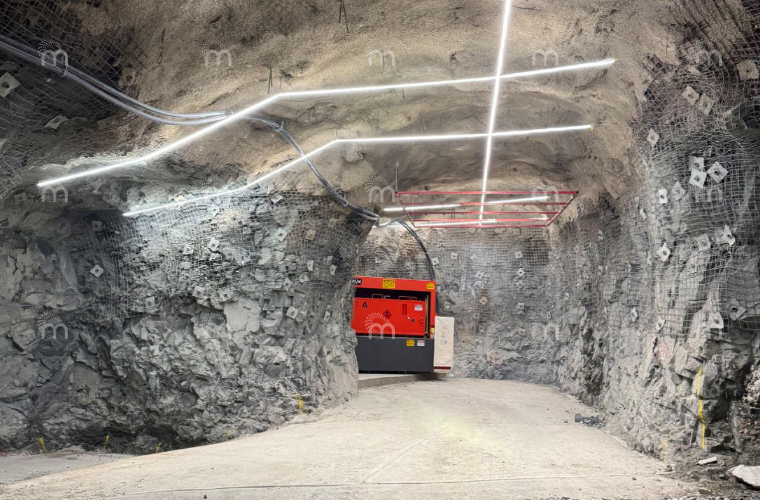
Underground fuel bays bring several risks together in one confined area. Mobile equipment, limited clearance, hazardous materials and frequent vehicle movements all make visibility particularly important.
Yet many fuel bays still rely on bulky Ex-rated light fittings that protrude into areas where loaders, boggers, and service vehicles operate.
When fittings are positioned in the path of mobile equipment, they can be vulnerable to impact and damage, creating additional maintenance requirements and potentially leaving areas poorly illuminated until repairs are completed.
Key Insight
The right hazardous area lighting can improve visibility while reducing the exposure of lighting equipment to mobile plant in confined underground areas.
A different approach to fuel bay lighting
Mineglow’s SafeGlo LED strip lighting provides an alternative to conventional individual fittings in hazardous underground environments.
Its slimline profile allows the lighting to follow the natural contour of the fuel bay, sitting close to the rock face or supporting structure and away from moving equipment.
Instead of relying on individual light sources positioned at intervals, continuous LED strip lighting provides more consistent illumination across the work area.
For underground fuel bays, where clearance is limited, this approach can make a significant difference.
Designed for hazardous underground environments
Lighting installed around underground fuel bays must be suitable for the hazardous conditions in which it operates.
SafeGlo is IECEx and ATEX certified for hazardous environments, including Gas Zones 1 and 2 and Dust Zones 21 and 22.
Its low-profile design also provides a practical advantage underground. With less of the lighting protruding into the operating area, there is less opportunity for loaders, boggers and other mobile equipment to strike the installation.
This can help protect the lighting while maintaining valuable clearance within the fuel bay.
More consistent illumination
Good underground lighting isn’t simply about producing more light. The way that light is distributed matters.
Individual fittings can create brighter areas close to the light source with darker sections between fixtures.
Continuous LED strip lighting distributes illumination along the installation area, helping reduce dark spots and shadowing.
For workers carrying out inspections, refuelling, maintenance or moving equipment through the area, more consistent illumination can make equipment, surfaces and potential hazards easier to identify.
Reducing lighting maintenance
Every damaged fitting creates another maintenance task.
The fault needs to be identified, replacement equipment organised and repairs scheduled, often in an area where access needs to be coordinated around normal operations.
Installing lighting closer to the profile of the fuel bay helps reduce its exposure to accidental impact.
Fewer damaged fittings can mean less lighting-related maintenance, fewer interruptions and reduced replacement costs over the life of the installation.
Beyond the fuel bay
The same approach can be applied to other confined and high-traffic areas underground, including:
- Conveyor transfer points
- Workshops and maintenance areas
- Confined service areas
- Hazardous underground work zones
Wherever space is limited and mobile equipment operates close to lighting infrastructure, a slimline installation can provide a practical alternative to conventional fittings.
Key Takeaways
- Underground fuel bays combine hazardous materials, mobile equipment and limited clearance.
- Bulky lighting fittings can be vulnerable to impact in confined areas.
- Continuous LED strip lighting provides more consistent illumination across the work area.
- A slimline profile helps keep lighting closer to the rock face or supporting structure.
- IECEx and ATEX-certified lighting supports safer hazardous-area applications.
- Reducing lighting damage can help lower maintenance requirements and operational disruption.
Frequently Asked Questions
Q: Why is lighting particularly important in underground fuel bays?
Fuel bays are confined, high-traffic areas where mobile equipment and hazardous materials come together. Consistent illumination helps workers and operators more clearly identify equipment, surfaces and potential hazards.
Q: What certification should fuel bay lighting have?
Lighting should be appropriately certified for the hazardous zone in which it will be installed. SafeGlo is IECEx and ATEX certified for Gas Zones 1 and 2 and Dust Zones 21 and 22.
Q: Why use LED strip lighting instead of conventional fittings?
Continuous LED strip lighting can provide more even illumination while its slimline profile keeps the lighting closer to the installation surface and away from mobile equipment.
Lighting the Way for Zero Harm
Better lighting design isn’t only about increasing brightness. It is about putting the right light in the right place while considering how people and equipment move through the area.
For underground fuel bays, SafeGlo provides continuous, hazardous-area illumination in a slimline format designed around the realities of underground mining.
How many damaged lighting fittings has your team replaced in high-traffic underground areas this year?
If you’re reviewing lighting in an underground fuel bay or other hazardous area, talk to the Mineglow team about whether SafeGlo is suitable for your application.