
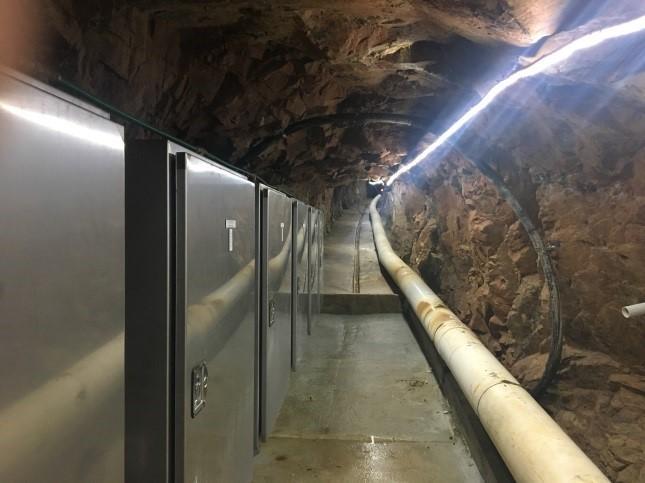
Underground coal mines carry a risk that most industrial sites never have to plan around. Methane and coal dust can combine with a single spark to cause a catastrophic explosion, and lighting equipment sits right in the middle of that risk because every fitting carries a live electrical circuit. This is why hazardous area lighting is not treated as a standard procurement item on a coal mine. It is treated as safety-critical equipment, tested and certified before it ever goes near an explosion risk zone.
For safety managers, procurement teams and EPCM contractors working on underground coal projects, getting this right means understanding zone classifications, certification standards, and what actually separates compliant certified LED lighting from lighting that only looks the part. MineGlow supplies IECEx and ATEX certified LED lighting purpose-built for the mining industry, including underground coal environments where compliance is non-negotiable.
Why Underground Coal Mines Demand Certified Hazardous Area Lighting
Coal seams release methane as they are cut, and in enclosed underground workings that gas can accumulate faster than ventilation clears it. Add fine coal dust into the mix, and you have two separate explosion hazards that safety and health management systems are specifically designed to control. Lighting is one of the few pieces of equipment that runs continuously in these zones, which makes it a constant point of risk if it is not properly rated.
A standard commercial LED fitting is not built to contain an internal spark or arc. If a fault occurs inside an uncertified fitting positioned in an explosion risk zone, that fault can become the ignition source for a much larger event. Certified hazardous area lighting is engineered so that any internal fault is physically contained within the fitting, or the fitting itself is built in a way that prevents an ignition-capable spark or excessive surface temperature from occurring at all. That distinction is the entire basis for compliance in underground coal.
Understanding Zone 1, Zone 2 and Division Classifications
Hazardous area lighting is specified against the classification of the zone it will operate in, not against a general description of the site. Zone 1 covers areas where an explosive atmosphere is likely to occur during normal operation. Zone 2 hazardous area lighting is rated for areas where an explosive atmosphere is not likely during normal operation but could occur for short periods, such as during a fault condition. Underground coal workings routinely include both, depending on proximity to the face, ventilation performance, and the specific explosion risk zone assessment carried out for that section of the mine.
Sites working to North American standards will instead reference Class 1 Division 2 LED lighting, which is the equivalent classification under the NEC and CEC framework for areas where flammable gases are present under abnormal conditions. Regardless of which system applies to a given project, the underlying principle is the same. Lighting must be matched to the specific zone it will sit in, not simply labelled hazardous location lighting and installed without reference to the actual classification.
Getting the classification wrong, or specifying lighting rated for a less demanding zone than the one it will actually operate in, is one of the most common compliance gaps we see on underground sites. Our guide on Ex zone compliance and IECEx certified LED strip lights breaks down how to match a fitting to a zone correctly before it goes anywhere near procurement sign-off.
What Makes LED Lighting Actually Certified for Coal Mine Compliance
The term hazardous area LED lighting gets used loosely across the industry, so it helps to be specific about what certification actually requires. A genuinely compliant fitting will carry independent third-party testing against recognised protection concepts, most commonly Ex d (flameproof enclosure, where any internal explosion is contained) and Ex e (increased safety, where components are built to prevent sparking or excessive heat under normal operation).
Beyond the protection concept, the fitting needs an IECEx or ATEX certificate that names the specific equipment, its temperature class, its gas group, and the standards it was tested against. This is different from a manufacturer simply stating that a product is suitable for hazardous areas. A genuine certificate is issued by an accredited testing body and can be checked against the official IECEx register.
Ingress protection matters just as much underground. Coal mine environments are damp, dusty and exposed to washdown and water ingress from strata seepage, so an IP66 or IP67 rating alongside the explosion protection certification is standard practice for anything installed at or near the face. MineGlow’s certified range is built to meet both requirements together, rather than treating explosion protection and water ingress as separate boxes to tick.
Compliance Requirements Under Australian Coal Mine Safety Regulations
In Australia, underground coal mine operators work within a legislated safety and health management system, and equipment used in explosion risk zones is subject to recognised standards set out under state coal mining safety and health legislation. These standards exist specifically to define what acceptable equipment looks like in practice, and lighting used in or near an explosion risk zone needs to demonstrate compliance against them before it is approved for use on site. You can review the current recognised standards and guidance notes directly through the Queensland Government’s mining safety and health resources.
For procurement and EPCM teams, this means documentation matters as much as the physical fitting. A supplier should be able to provide test reports, certificates of conformity and clear technical datasheets that a safety officer can hold up against the site’s own risk assessment. Lighting that cannot be traced back to a valid, current certificate creates a compliance gap that surfaces during an audit, not before one, which is the worst possible time to discover it.
Choosing the Right Hazardous Area LED Lighting for Your Site
Specifying lighting correctly starts with the explosion risk zone drawing for the section of the mine being lit, not with a product catalogue. From there, a few practical questions consistently separate a correct specification from a costly mistake.
First, confirm the exact zone, Zone 1 or Zone 2, and match the certification to it rather than over-specifying or under-specifying. Second, check the gas group and temperature class against what is actually present in that section of the mine, since methane classification requirements differ from other flammable gas groups. Third, factor in the physical environment. Vibration from mobile equipment, coal dust loading, and constant moisture all shorten the working life of lighting that is not built with mining specifically in mind.
Coal mines also value lighting that reduces maintenance burden in hard-to-access areas. Continuous LED strip formats that deliver uniform, shadow-free illumination along a heading or roadway reduce the number of individual fittings that need inspection and replacement compared with traditional point source lighting, which matters when every inspection in an explosion risk zone requires its own procedure.
Why MineGlow for Coal Mine Compliance
MineGlow has supplied certified hazardous area lighting to Australian mining operators, including major operators working on underground coal assets, for over a decade. Every fitting in our explosion-proof range carries current IECEx and ATEX certification, documented IP67 ingress protection, and technical support to help your team match the right product to the right zone before installation, not after an audit flags a gap.
If you are specifying lighting for an underground coal project, our team can work through your explosion risk zone requirements with you directly and provide the certification documentation your safety and health management system needs. Contact MineGlow today to discuss certified hazardous area lighting for your site.
Frequently Asked Questions
Q: What is the difference between Zone 1 and Zone 2 hazardous area lighting?
Zone 1 lighting is rated for areas where an explosive atmosphere is likely to occur during normal operation. Zone 2 lighting is rated for areas where it is only likely to occur briefly, such as under fault conditions. Zone 1 rated equipment can generally be used in Zone 2, but not the other way around.
Q: Is Class 1 Division 2 LED lighting the same as Zone 2?
They cover similar risk conditions but come from different standards frameworks. Class 1 Division 2 is used under the North American NEC and CEC system, while Zone 2 is used under the IEC and Australian standards system that IECEx and ATEX certification follow. Always confirm which framework your site’s compliance documentation references.
Q: What certification should I ask for when buying hazardous area LED lighting?
Ask for the current IECEx or ATEX certificate for the specific product, showing the protection concept, gas group and temperature class. You should be able to verify this against the official IECEx certified equipment register rather than relying on marketing claims alone.
Q: Does hazardous area lighting also need an IP rating for underground coal mines?
Yes. Explosion protection and ingress protection are separate ratings that both need to be met. Underground coal environments are wet and dusty, so IP66 or IP67 rated fittings alongside valid Ex certification are standard for compliant installations.
Q: How often does hazardous area lighting need to be recertified or inspected?
Inspection frequency is set by your site’s safety and health management system and relevant recognised standards, not by the lighting manufacturer alone. Certification itself does not expire while the equipment and its documentation remain valid, but routine inspection for damage or degradation is a standard part of underground compliance procedures.